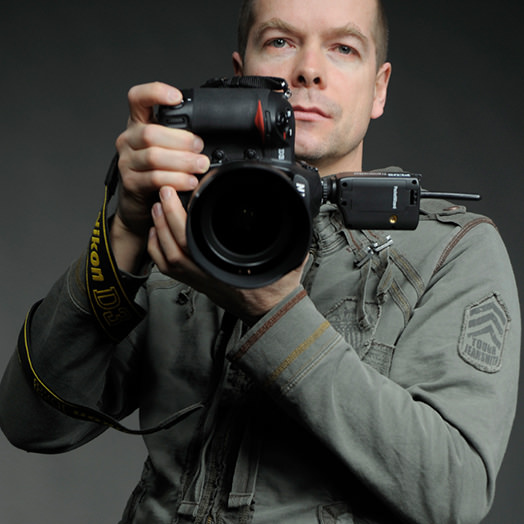
Your task: "To see things in a certain way and to realize what you see accordingly." Accompanied by such subtle words, you will travel with photographer Jens Brüggemann through his more than twenty years of experience in the field of model photography. Especially nowadays, when anyone can quickly reach for a digital camera to create so-called model photos, you have to stand out and prove yourself as a (budding) professional - with something extraordinary, with a feel for the right location, the right time, for an eye-catching image idea, for light, lighting, model, styling and pose. All these and other aspects are discussed in this training course on over 240 PDF pages in 10 lessons. You will need to bring your own unique style with you or develop one yourself - but your technical skills and photographic eye will leave this tutorial with a refined and enhanced level of expertise.
10 illustrated lessons with over 240 pages in PDF format on professional model photography
From the field: How to successfully search for equipment, models, locations & image ideas
At the shoot: designing photos, models, their style and poses, lighting & harmonious teamwork
Get tips and tricks from a professional model photographer and create photos that stand out from the crowd with an extra pinch of quality.
content
Details of the content
Professional Model Photography (E-Book)
Professional model photography: Part 1 - Photographing "models"
This "Professional model photography" tutorial series is designed to help you achieve exceptional, professional-looking model photos faster and more efficiently. The number of model photographers has risen steadily in recent years with the establishment of digital photography. The Internet, with its opportunities for non-professional photographers to publish images, has certainly played its part in this. After all, the best photos should not become obsolete unseen in the archive.
In order to be successful, it is therefore necessary to take exceptional photos that stand out from the mass of model photographs that are published every day.
This is part 1 of 10.
Professional model photography: Part 2 - The sensible (!) equipment
You certainly don't need a specific camera or special lenses to be able to take high-quality model photos. Ultimately, it doesn't really matter which brand you choose and which model you select. Buying a camera and accessories should not become a war of faith; it is more important to buy what really helps you and takes you further. In this respect, you should first define your requirements and then see which model best meets them. As I assume that you all already have cameras and accessories, I just want to give you a few suggestions as to what you should look out for (in the future).
Professional model photography: Part 3 - Finding suitable models
For many photographers, finding a suitable model is the main obstacle to a professional model photo. The photographic equipment has been growing for years; a great location has already been found; and the image idea has been haunting the photographer's mind for months. But finding a model who fits the image idea and meets the requirements is the most difficult part for most photographers. So here are a few tips from me.
Professional model photography: Part 4 - Location scouting
Wherever I look (when cycling, out of the car, when traveling, in the city, etc.): I see "locations" everywhere. The world is full of places that could be used as part of a picture (or at least as a background). You just have to look closely; the photographer has to "see" the presence and quality of locations!
Anyone who claims to have no (spatial) possibility of taking model photos either lacks imagination or a photographic eye.
Professional model photography: Part 5 - Developing image ideas
First of all, the good news: no, you don't always need a sophisticated image idea to take a remarkable photo. You can also do it without a (previous) picture idea, without a concept.
However, having an image idea helps immensely. This is because most photographers find it much easier if they are given a task that acts as a kind of image idea and gives them guidelines that they can use as an introduction to the photo shoot.
Professional model photography: Part 6 - Image composition tips
Photography is not just the use of photographic equipment. Rather, it is about "seeing" things in a certain way. The technical art is then to realize what has been seen. However, image composition and set design play an essential role in the photographic result alongside the technical component. I see model photography as part of photo design. This implies that the photographer is responsible for everything that is recognizable in the image.
Professional model photography: Part 7 - Styling tips
As already explained in the tutorial above, the photographer (at least in the field of model photography) is responsible for everything that can be seen in the photos. And that includes the styling!
Professional model photography: Part 8 - Skillfully lighting models
Photography means "painting with light". Lighting technology is therefore an integral part of photography, at least if you have opted for creative model photography.
However, many photographers prefer to invest in a second camera body or an entire arsenal of lenses rather than in "light".
The fact is, however, that the use of lighting technology expands the photographer's creative scope enormously. All those who have learned about the blessings of creative lighting at a lighting technology workshop or seminar or from a friend, for example, will confirm this.
Professional model photography: Part 9 - Efficient teamwork
When taking photos, it is not only important that the model looks good and that the photographer masters the camera technique. It is almost more important that both harmonize together. Only then can special photos be created! This tutorial lists everything you need for a good and efficient collaboration.
Professional model photography: Part 10 - Posing tips
I don't believe in encouraging models to adopt poses based on models, for example from posing books. I am convinced that every person is so individually different that copying poses leads to cramped, wooden-looking postures. In my opinion, it is therefore better to explain some laws and advantageous criteria to the models so that they can then act photogenically in front of the camera on their own.
Professional model photography: Part 1 - Photographing "models"
Professional model photography: Part 2 - The sensible (!) equipment
Professional model photography: Part 3 - Finding suitable models
Professional model photography: Part 4 - Location scouting
Professional model photography: Part 5 - Developing image ideas
Professional model photography: Part 6 - Image composition tips
Professional model photography: Part 7 - Styling tips
Professional model photography: Part 8 - Skillfully lighting models
Professional model photography: Part 9 - Efficient teamwork
Professional model photography: Part 10 - Posing tips
Examples of use
Open gallery
Do it differently and exaggerate - in short: let your creativity run wild.
Open gallery
Probably the biggest challenge: finding the right model for your picture idea.
Open gallery
One model, hundreds of poses: You will receive numerous tips on posing during the training.
Open gallery
From the equipment to the make-up: you are responsible for everything!
Open gallery
A picture idea is not a must, but it will help you. Your trainer will explain how to develop it.
Open gallery
Light and shadow: As a photographer, you need to know how to use light as a creative tool.
Open gallery
Model photography can mean many things: Get to know the different areas and aspects.
Open gallery
Styling, lighting, framing ... Find out how your idea becomes a photo in the end.
Open gallery
You will also receive helpful information on the equipment of a model photographer.
Open gallery
Create a feel-good atmosphere during the shoot, as this is the only way to create fascinating pictures.



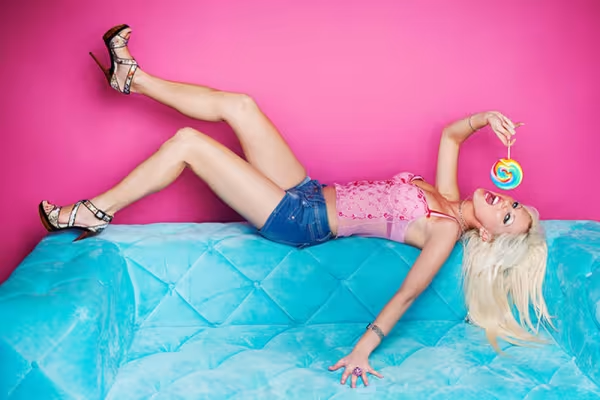 Do it differently and exaggerate - in short: let your creativity run wild.
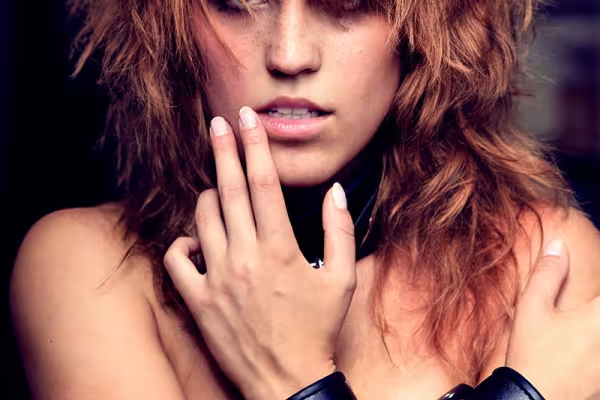 Probably the biggest challenge: finding the right model for your picture idea.
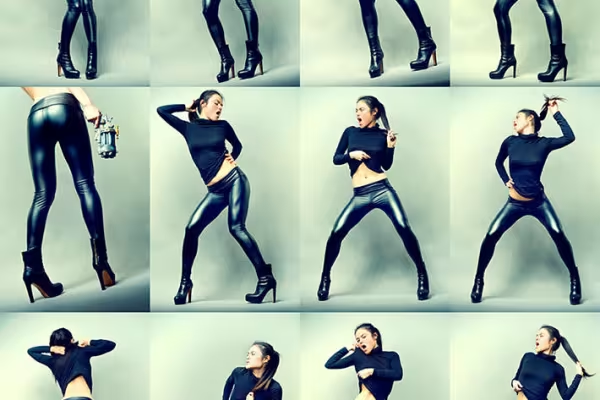 One model, hundreds of poses: You will receive numerous tips on posing during the training.
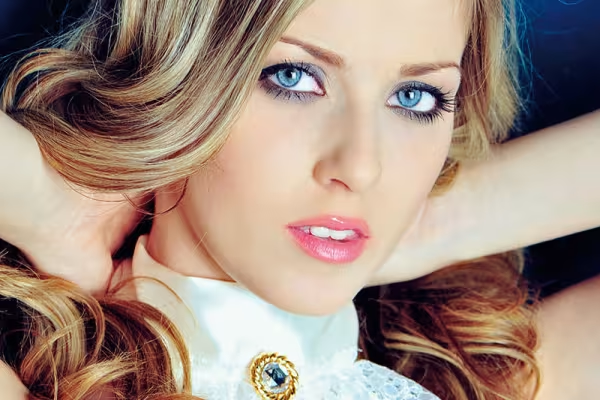 From the equipment to the make-up: you are responsible for everything!
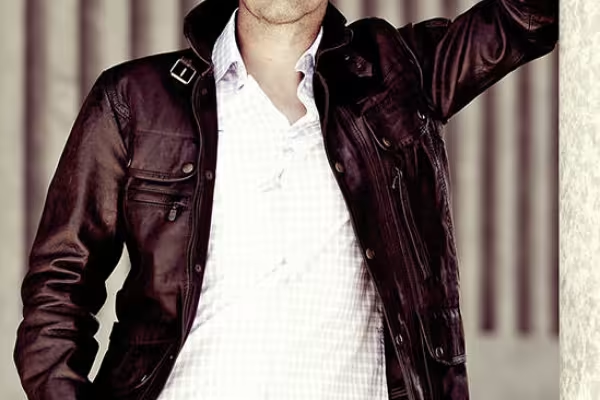 A picture idea is not a must, but it will help you. Your trainer will explain how to develop it.
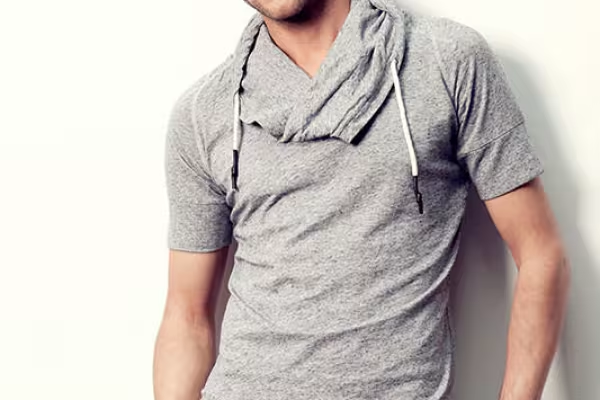 Light and shadow: As a photographer, you need to know how to use light as a creative tool.
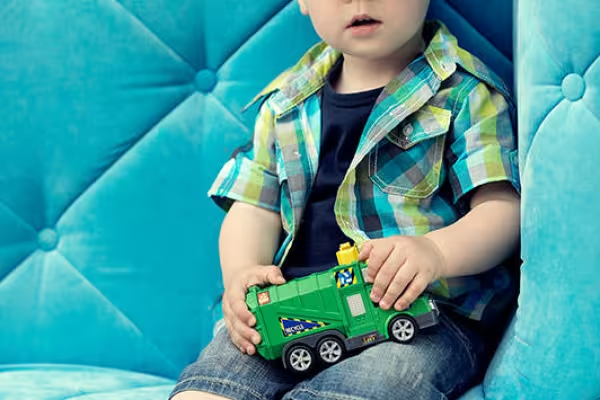 Model photography can mean many things: Get to know the different areas and aspects.
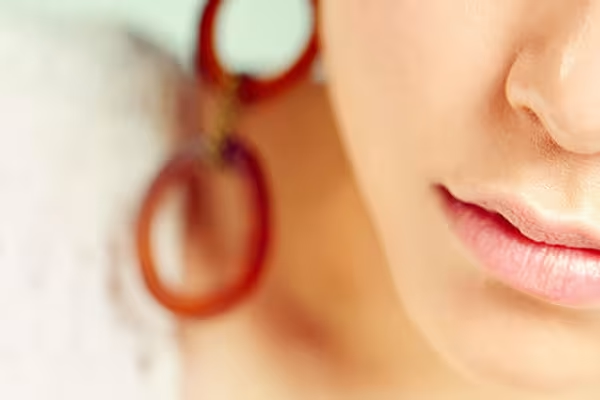 Styling, lighting, framing ... Find out how your idea becomes a photo in the end.
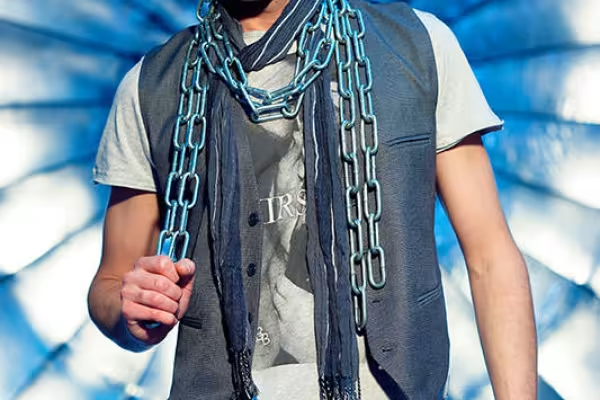 You will also receive helpful information on the equipment of a model photographer.
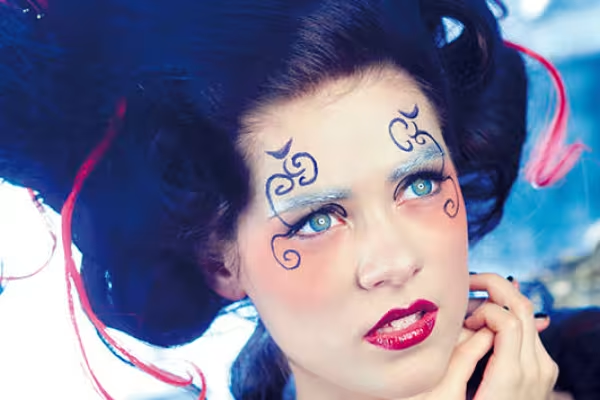 Create a feel-good atmosphere during the shoot, as this is the only way to create fascinating pictures.


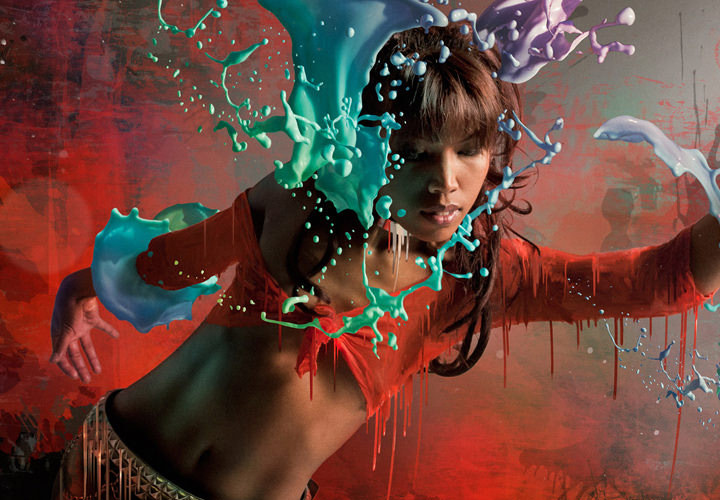
Comment now „Professional model photography“